When Water Won’t Stay in the Pipes
Every minute of delay increases water damage, so speed matters more than anything else in those first critical moments.
Denver homeowners face unique risks. Freezing nights followed by rapid daytime thaws create expansion and contraction cycles that weaken pipes over time. When a supply line finally gives way, the pressure behind it forces water out with surprising force.
Common Causes of Spraying Water Supply Pipes in Denver, CO
Frozen and Thawed Pipe Bursts
Frozen and thawed pipe bursts spray pressurized water through fractured sections when ice melts after Denver’s sudden cold snaps in late fall and early spring.
Insulation gaps in exterior walls, crawl spaces, and attics create vulnerable zones. Pipes near garage doors or in unheated basements face the highest risk.
Corrosion and Age-Related Failures
Corrosion and age-related failures spray water when galvanized steel or aging copper supply lines thin from the inside out until they cannot contain normal water pressure.
Discolored water, reduced flow, or frequent pinhole leaks signal advancing corrosion. Replacement with modern materials prevents catastrophic failure.
Excessive Water Pressure Damage
Municipal water pressure in the Denver metro sometimes exceeds what residential plumbing is designed to handle. Chronic overpressure stresses joints, valves, and pipe walls. The weakest point fails first, often spraying water unexpectedly.
Pressure regulators protect your entire system. If your home lacks one, or if yours has aged beyond reliable function, the risk of supply line failure rises significantly.
Loose or Damaged Pipe Joints
Soldered copper joints can fail from thermal cycling, vibration, or initial installation flaws. Compression fittings loosen over time. Threaded connections corrode or crack. Any of these failures can release pressurized spray at the joint itself.
Joint failures often spray in a more directed pattern than burst pipe walls, but the water volume is equally damaging.
Ground Movement and Settling Effects
Ground movement and settling effects spray water when Colorado’s expansive clay soils shift with moisture changes, stressing buried supply lines and slab-embedded pipes until repeated flexing weakens connections or creates fatigue cracks.
Homes in areas with notable soil movement require more frequent inspection of supply line integrity.
Locate and Operate Your Main Water Shutoff
Find your home’s main shut-off valve, typically near the water meter, in the basement, crawl space, or utility closet, and turn it clockwise until it stops. This cuts water to the entire house and is the single most effective action you can take in the first minute. If you can’t locate the main valve or it won’t turn, stop trying and call an emergency plumber right away. Don’t waste critical minutes searching.
Drain Pressure from the System Safely
Drain pressure from the system safely by opening faucets at the lowest and highest points in your home after closing the main valve.
Protect Your Home from Water Damage
Move furniture, electronics, and valuables from the spray zone. Use buckets or towels to redirect water toward drains. Document damage with photos for insurance purposes. Every minute of delay increases water damage, so act on the water shut-off first and worry about cleanup second.
When to Evacuate Due to Electrical Hazards
Water and electricity are a serious combination. If water is pooling near outlets, appliances, or an electrical panel, do not walk through it or touch anything electrical. Turn off power at your home’s main electrical panel if you can reach it safely without stepping through water. If you cannot, evacuate and wait for professional assistance.
Temporary Measures vs. Professional Repairs
Why Clamping or Tape Rarely Holds on Supply Lines
Hardware store pipe repair clamps and self-fusing tape work on drain lines with zero pressure. They almost always fail on pressurized supply pipes.
Water continues eroding the breach beneath the patch, and the eventual failure often causes more damage than the original spray.
When to Call a Plumber for Spraying Pipes
Non-Negotiable Emergency Situations
Call an emergency plumber immediately when: you cannot locate or operate the shutoff valve; water reaches electrical systems; spray continues after shutoff; the damaged pipe serves essential needs and you cannot restore safe water; or you suspect a gas line leak near the water damage.
Signs the Damage Is Deeper Than Surface Spray
Water spraying from one point often indicates broader system stress. Multiple weak points may exist along the same pipe run. Corrosion, overpressure, or freeze damage rarely isolates to a single spot.
Prevention and Long-Term Protection for Denver Homes
Seasonal Pipe Protection for Colorado Winters
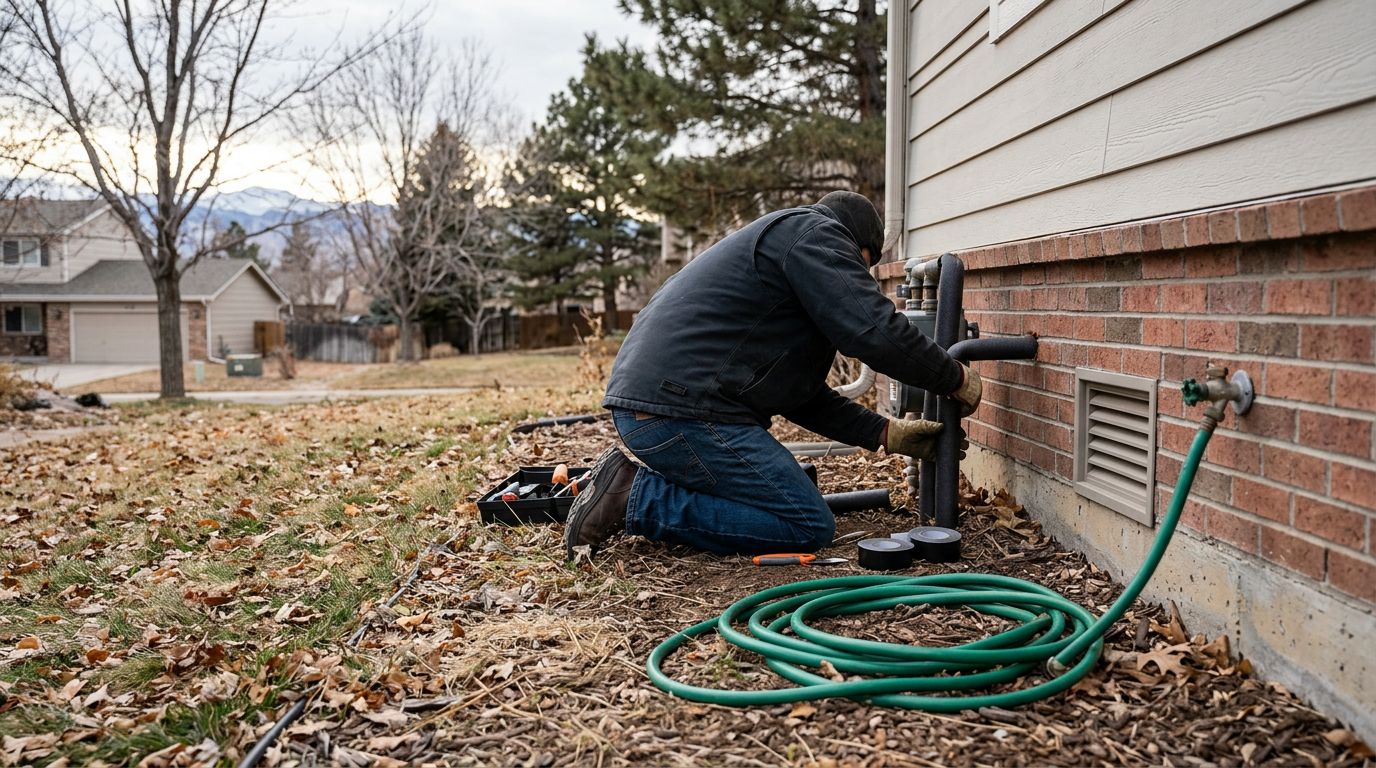
Insulate exposed pipes before winter arrives. Maintain moderate indoor temperatures even when you’re away. Seal foundation vents and garage door gaps. Disconnect outdoor hoses and drain frost-proof sillcocks. These simple steps prevent the freeze-thaw cycles that destroy supply lines.
Pressure Regulation and Inspection Schedules
Test your home’s water pressure annually with an inexpensive gauge. Schedule professional plumbing inspections to catch corrosion, joint wear, and hidden leaks before they become spraying emergencies.
Frequently Asked Questions
Why is my water supply pipe spraying water suddenly?
A supply pipe sprays water when pressure exceeds what the pipe or its connections can contain, often from a burst section, loose joint, frozen-thaw damage, corrosion failure, or water hammer shock. The spray point reveals where the structural weakness occurred. Sudden temperature changes, age-related wear, or pressure spikes typically trigger the failure.
What should I do immediately when a pipe starts spraying water?
Shut off the main water valve first to stop the flow, then turn on faucets to drain remaining pressure, move valuables from the area. If water nears electrical systems, evacuate and wait for professional assistance.
Can a spraying pipe fix itself or stop on its own?
A spraying pipe will not repair itself. Water pressure continues forcing through the breach, and delays worsen structural damage, mold risk, and repair costs. Temporary measures only slow the problem until professional repair. Ignoring urgent plumbing issues can lead to expensive repairs, structural damage, health risks from mold and bacteria, and electrical hazards.
How do I know if I need an emergency plumber or if it can wait?
Call an emergency plumber immediately when you cannot locate or operate the shutoff valve, when water reaches electrical systems, when spray continues after shutoff, or when the pipe serves essential needs and you cannot restore safe water.
What causes water pipes to burst or spray in Denver homes?
Frozen pipes during cold snaps, age-related corrosion, high water pressure, ground shifting, and improper installation are common causes in the Denver metro area. Seasonal temperature swings stress pipes more than in stable climates. Many homes in the region still rely on outdated plumbing systems made of galvanized steel, polybutylene, or aging copper.
Will my homeowner’s insurance cover water damage from a spraying pipe?
Most policies cover sudden water damage from burst pipes but exclude gradual leaks or maintenance neglect. Document everything with photos, mitigate further damage promptly, and keep repair receipts for your claim. Contact your insurer quickly to understand your specific coverage and obligations.
How can I prevent water supply pipes from spraying or bursting in the future?
Insulate exposed pipes before winter, maintain moderate indoor temperatures, install pressure regulators, schedule annual plumbing inspections, and know where your main shutoff valve is located before emergencies occur. Regularly inspecting pipes, avoiding clogged drains, maintaining your water heater, and scheduling routine plumbing maintenance reduces risks significantly.
Call now for 24/7 help**We respond with same-day appointments across the Denver metro.** Our licensed Denver plumbers arrive with the tools and materials to stop spraying pipes and restore safe water. Call **(720) 215-8600** now for 24/7 emergency plumbing.